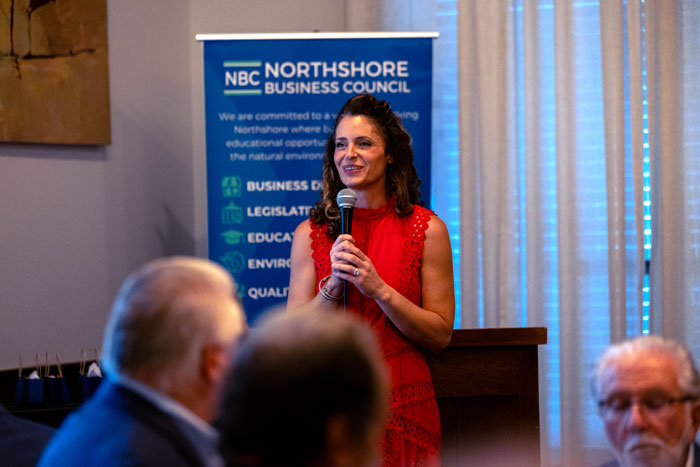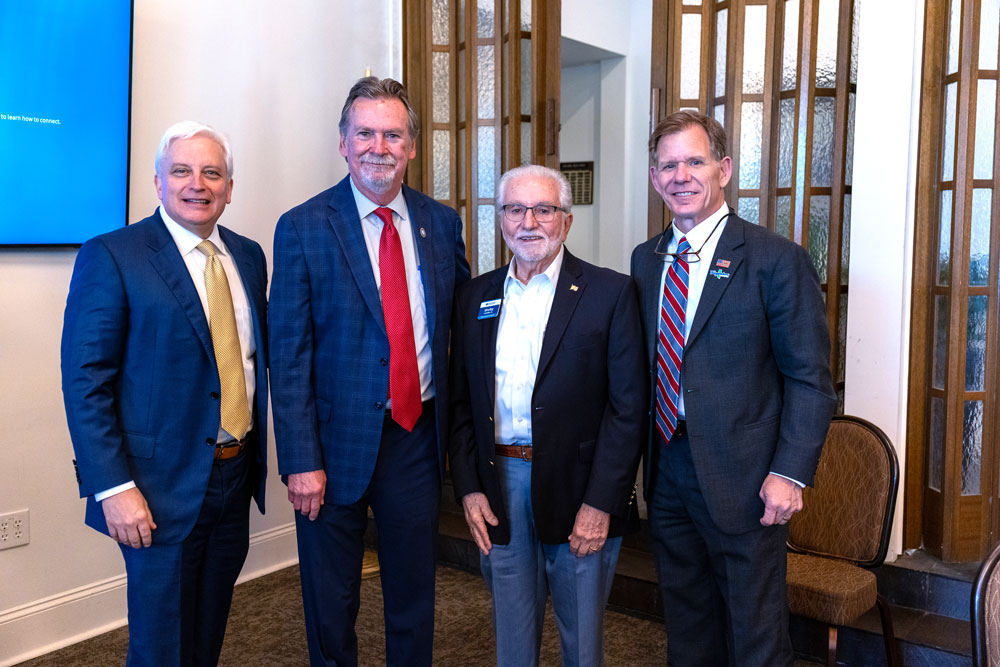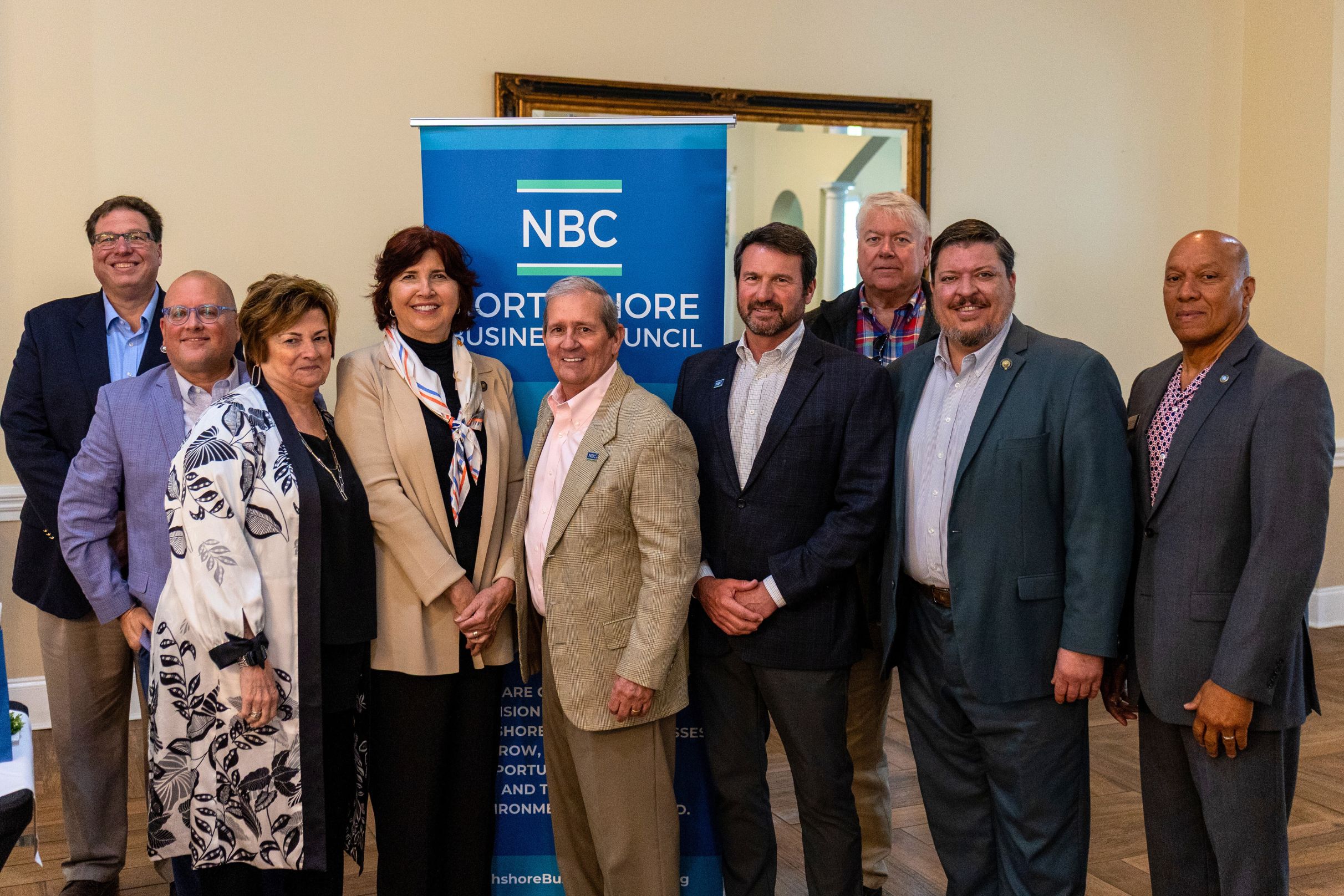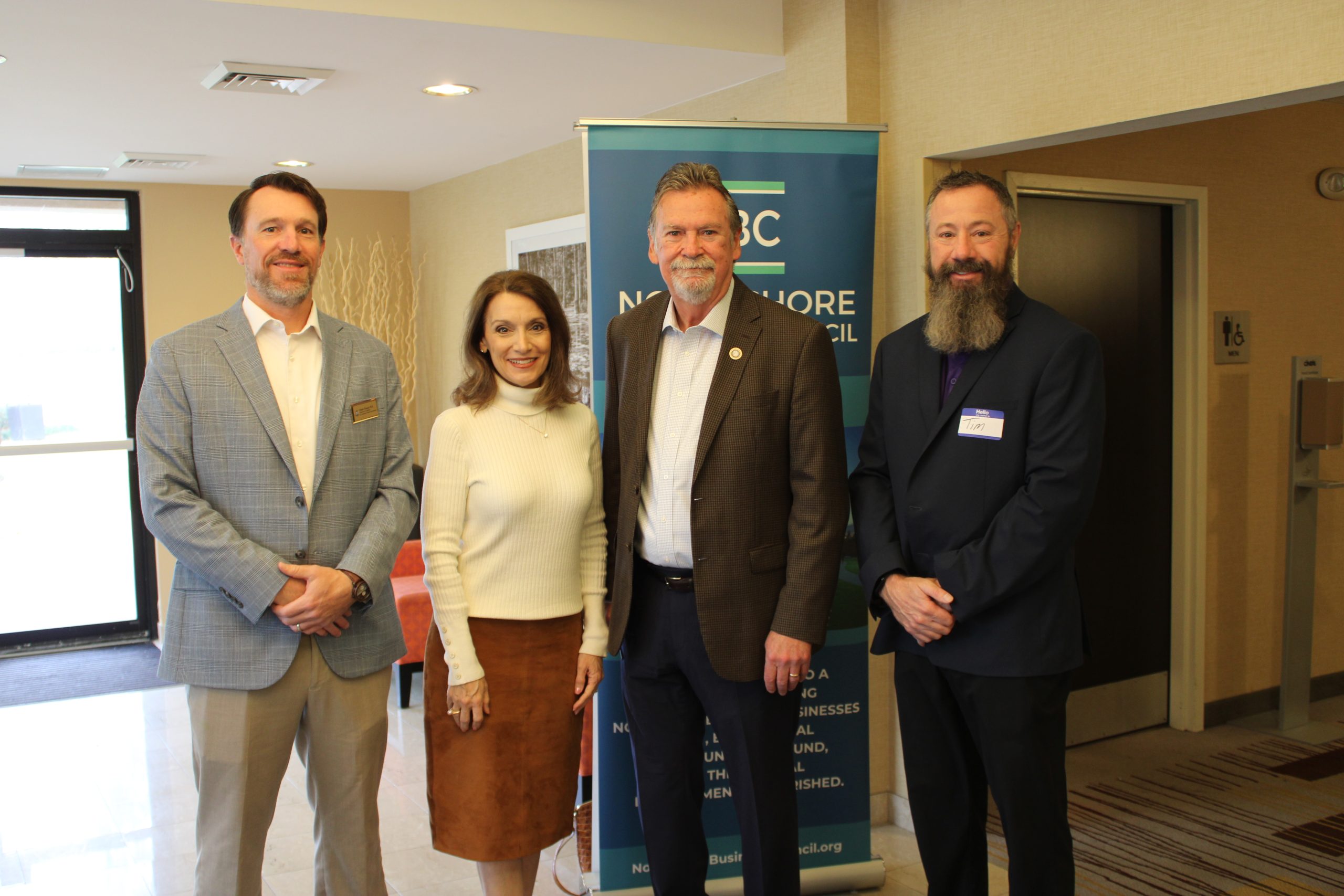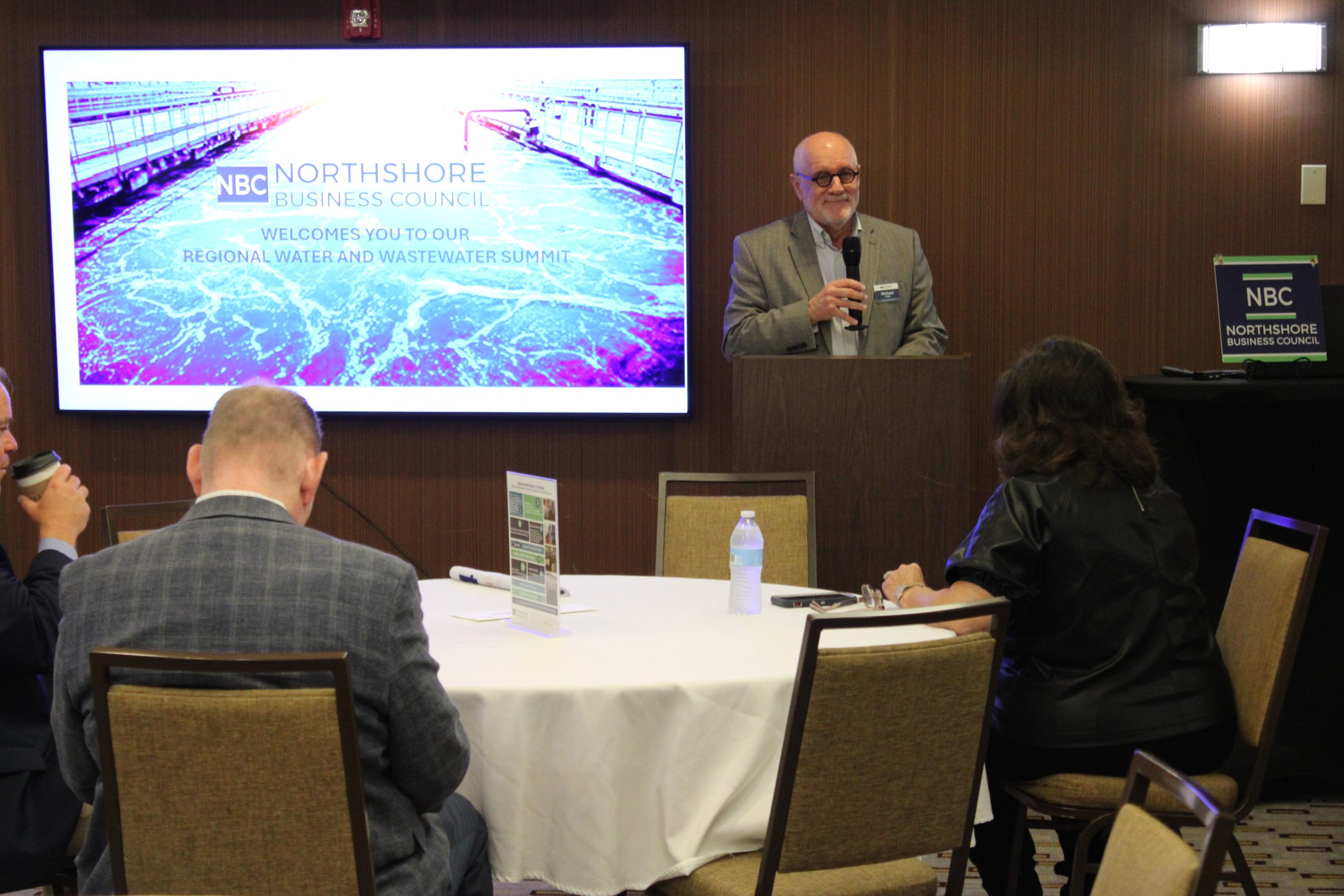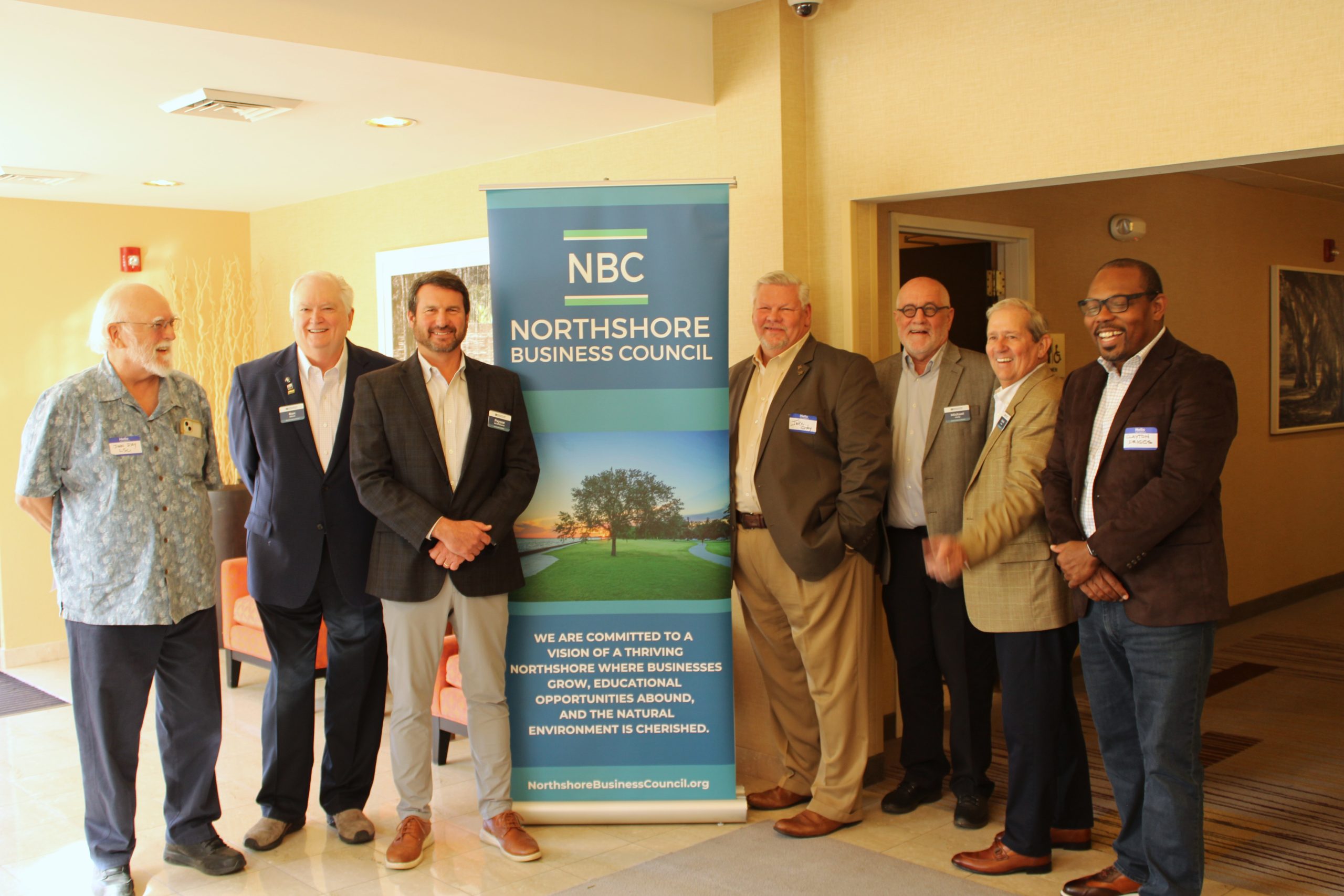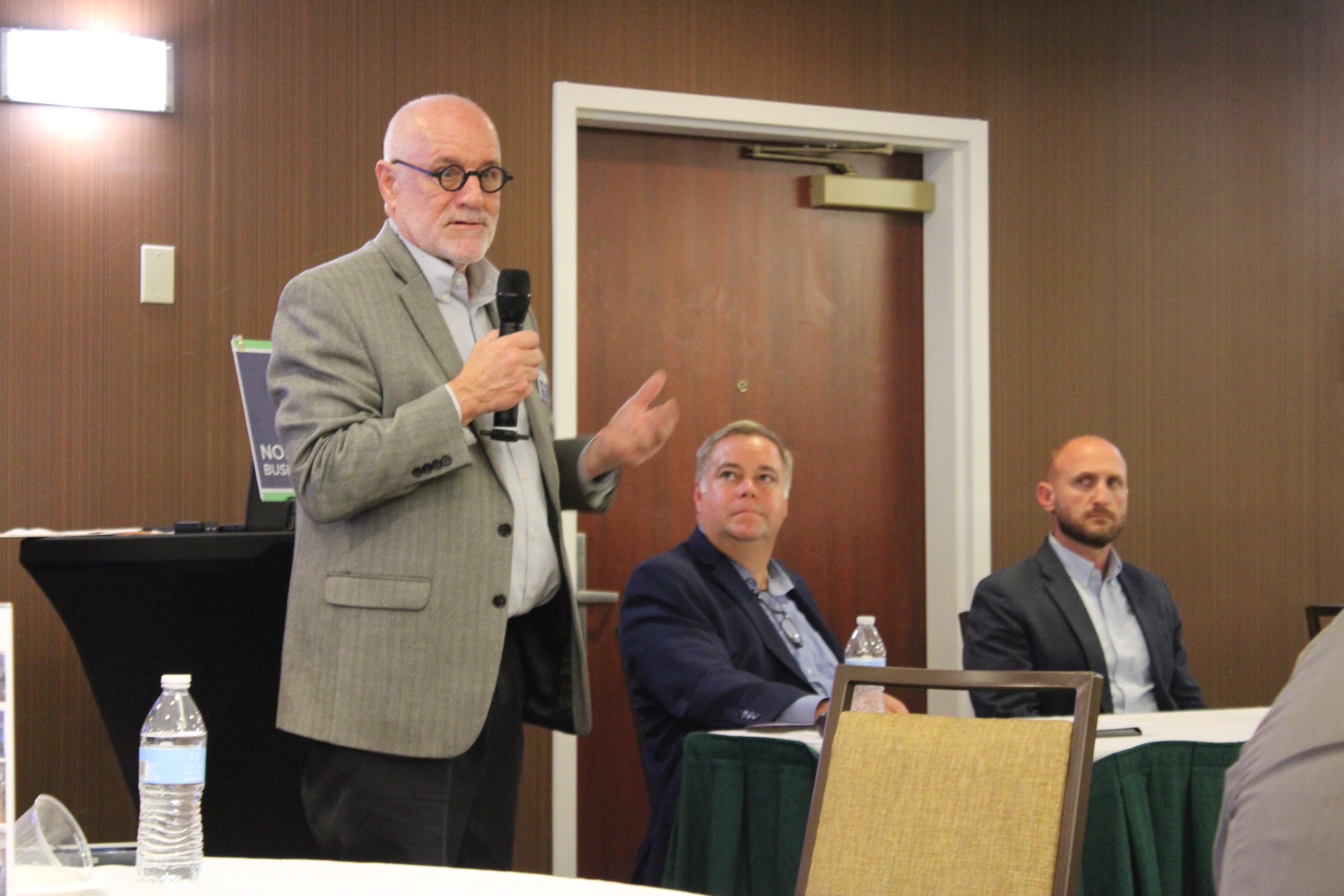
The North Shore Business Council’s Infrastructure Committee convened regional leaders, engineers, utility professionals and policymakers at the 2025 Northshore Regional Water and Wastewater Summit in Covington on November 19. With St. Tammany Parish’s population climbing from 191,000 in 2000 to more than 280,000 today, the event focused on the urgent need for sustainable water and wastewater systems that can support one of Louisiana’s fastest growing regions.
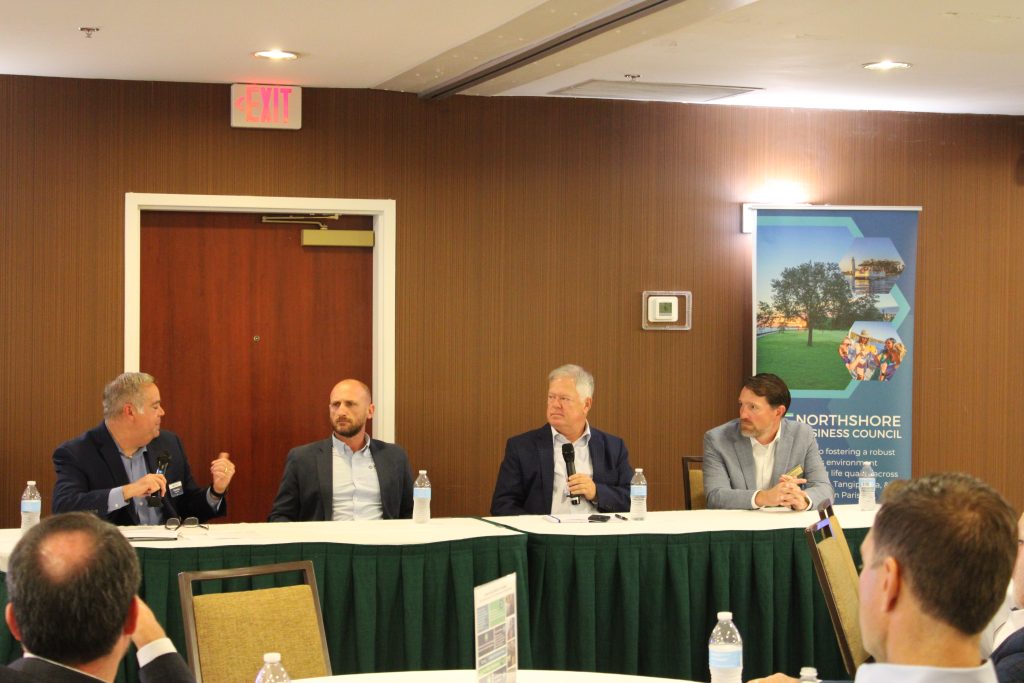
NBC President Ron Blitch opened the summit, followed by a welcome from Infrastructure Committee Chair Mike Holly and program guidance from Co-Chair Tommy Buckel, who also moderated a panel of regional utility leaders. Presentations throughout the day highlighted innovative workforce training, cost saving treatment technologies, regional consolidation efforts and the growing role of natural solutions such as wetlands assimilation.
Workforce innovation prepares the next generation
A major highlight came from Jake Groby III, City of Mandeville Superintendent of Utilities, who unveiled Louisiana’s first high school water and sewer treatment program. The new curriculum is a partnership between local utilities, the St. Tammany Parish School Board and North Shore Workforce Development. Students will complete a ten month program designed to prepare them for state operator licensing immediately after graduation.
This program aims to solve a critical shortage of certified operators across the region. Groby described the initiative as a model that can be replicated statewide to strengthen the utility workforce.
Mandeville reduces costs through advanced treatment solutions
Groby also detailed Mandeville’s shift from ultraviolet disinfection to peracetic acid. This transition reduced annual costs from 164,000 dollars to 43,000 dollars and eliminated harmful byproducts often associated with other disinfection methods. The system demonstrated strong performance during Hurricane Francine, successfully managing more than eight million gallons of inflow in one day.
Tangipahoa pursues regional consolidation to improve efficiency
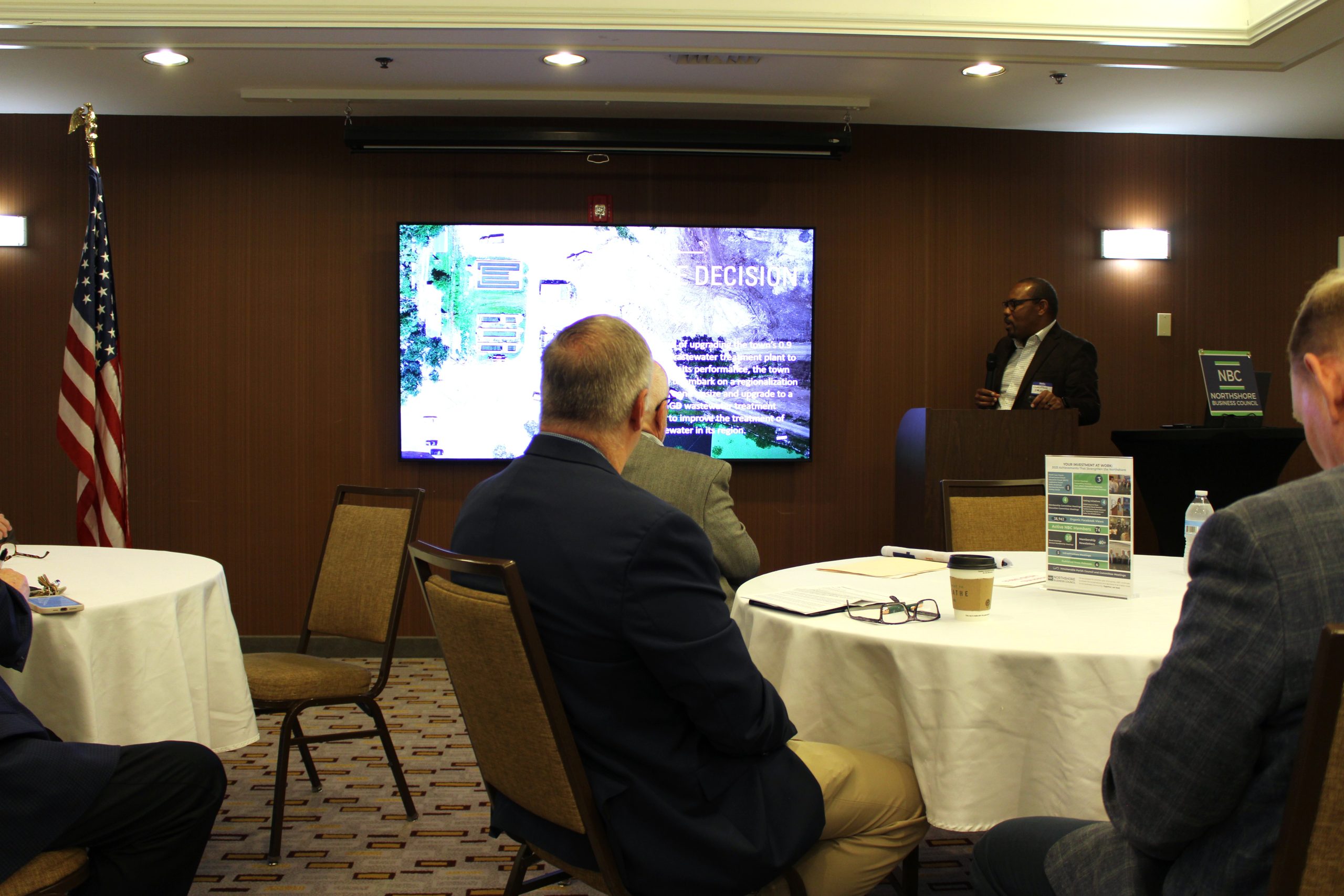
Consultant Clayton J. Driggs outlined the North Tangipahoa Regional Wastewater Treatment and Transmission Project, which consolidates service for seven municipalities along Highway 51. The project increases treatment capacity from 0.9 million gallons per day to 2.0 million gallons per day. Driggs noted that regional consolidation is significantly more cost efficient than operating many small plants. Strategic phasing and coordinated planning are central to the project’s overall success.
Wetlands as a natural treatment system and coastal solution
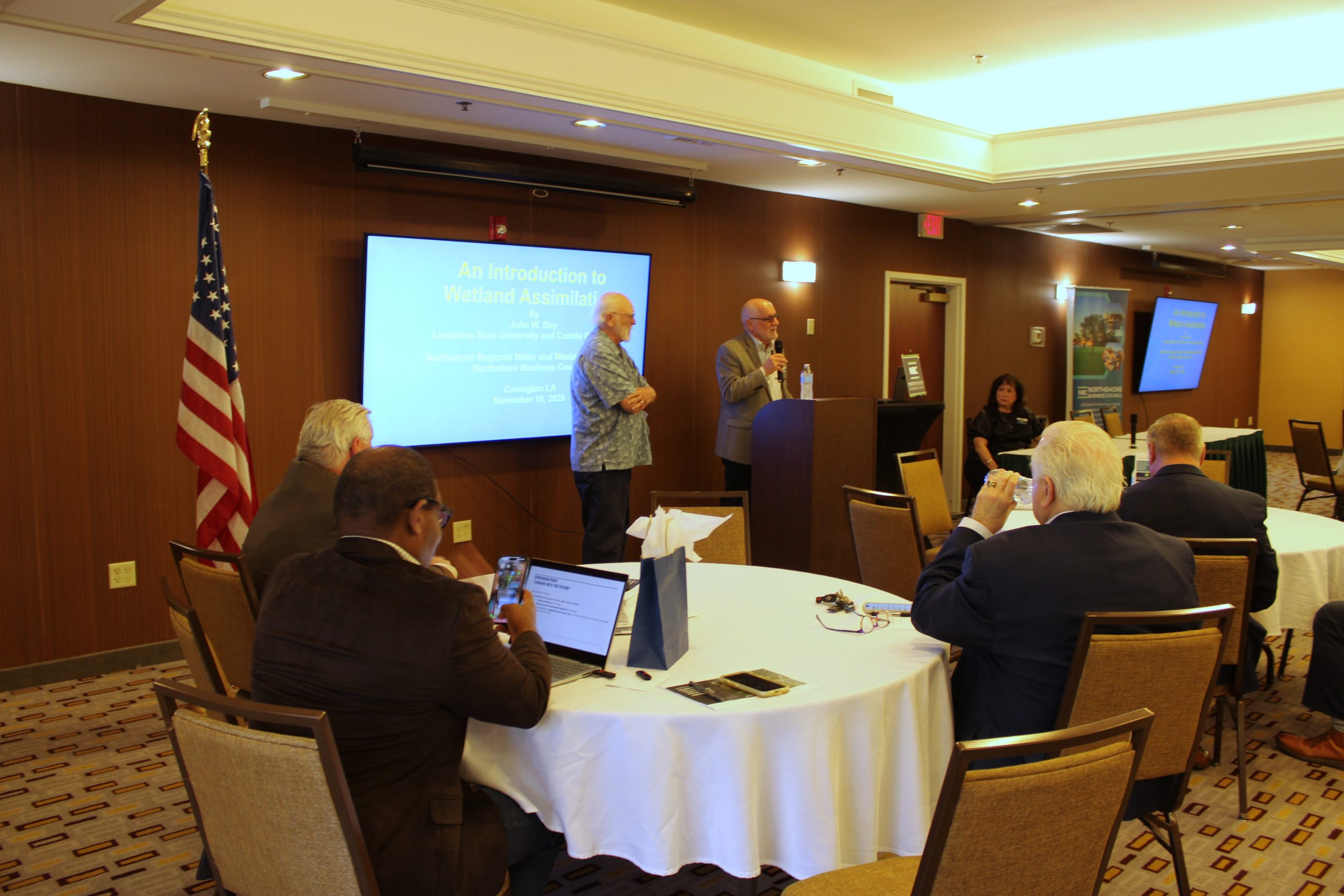
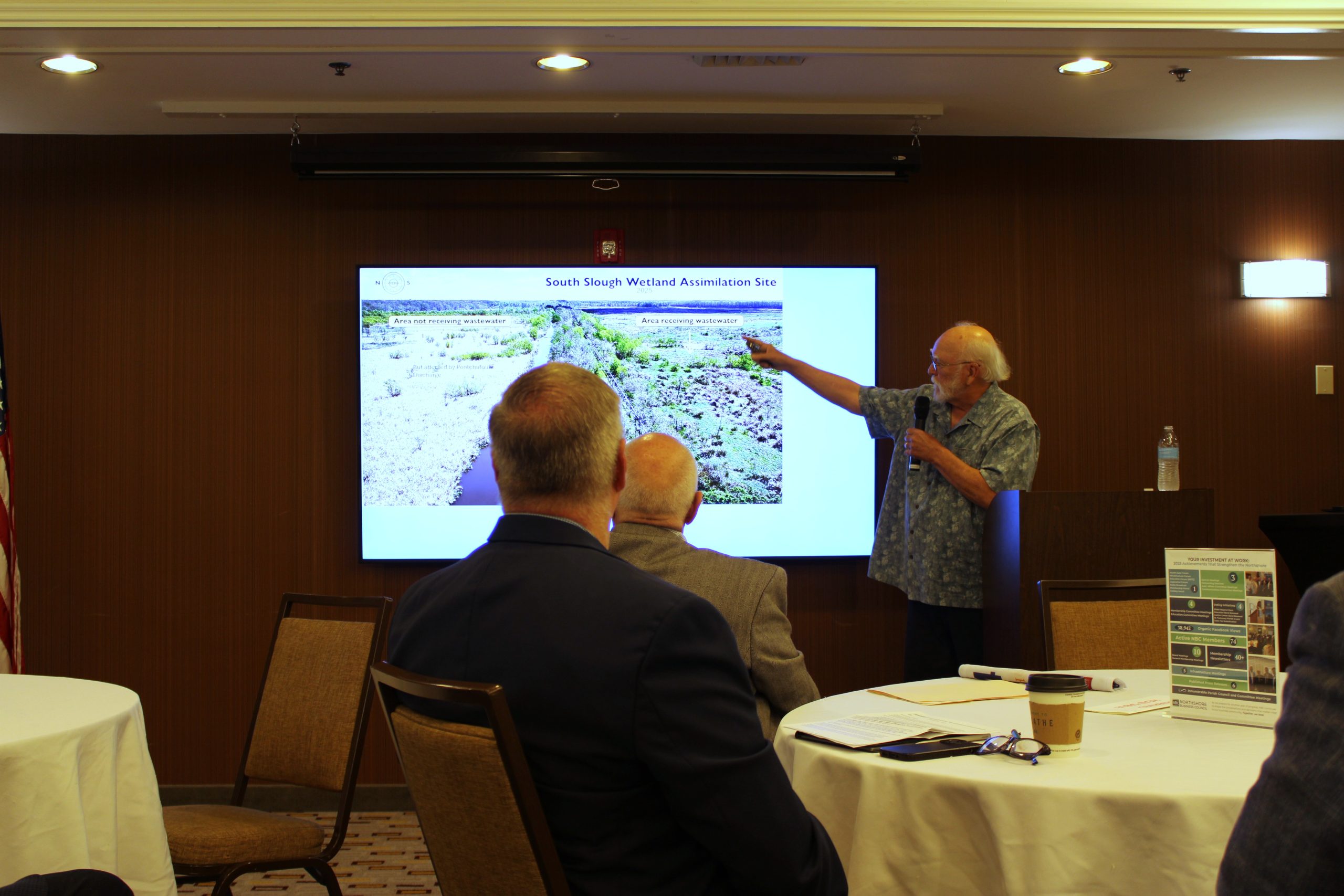
Dr. John Day, LSU Professor Emeritus, provided insight into wetlands assimilation as both a wastewater treatment method and a coastal restoration strategy. He explained how Louisiana’s natural wetlands, which continue to shrink each year, can serve as powerful filtration systems that also strengthen coastal ecosystems. With fifteen assimilation sites currently operating across the state, this approach has become an important tool for long term environmental sustainability.
Utility leaders identify shared challenges and opportunities
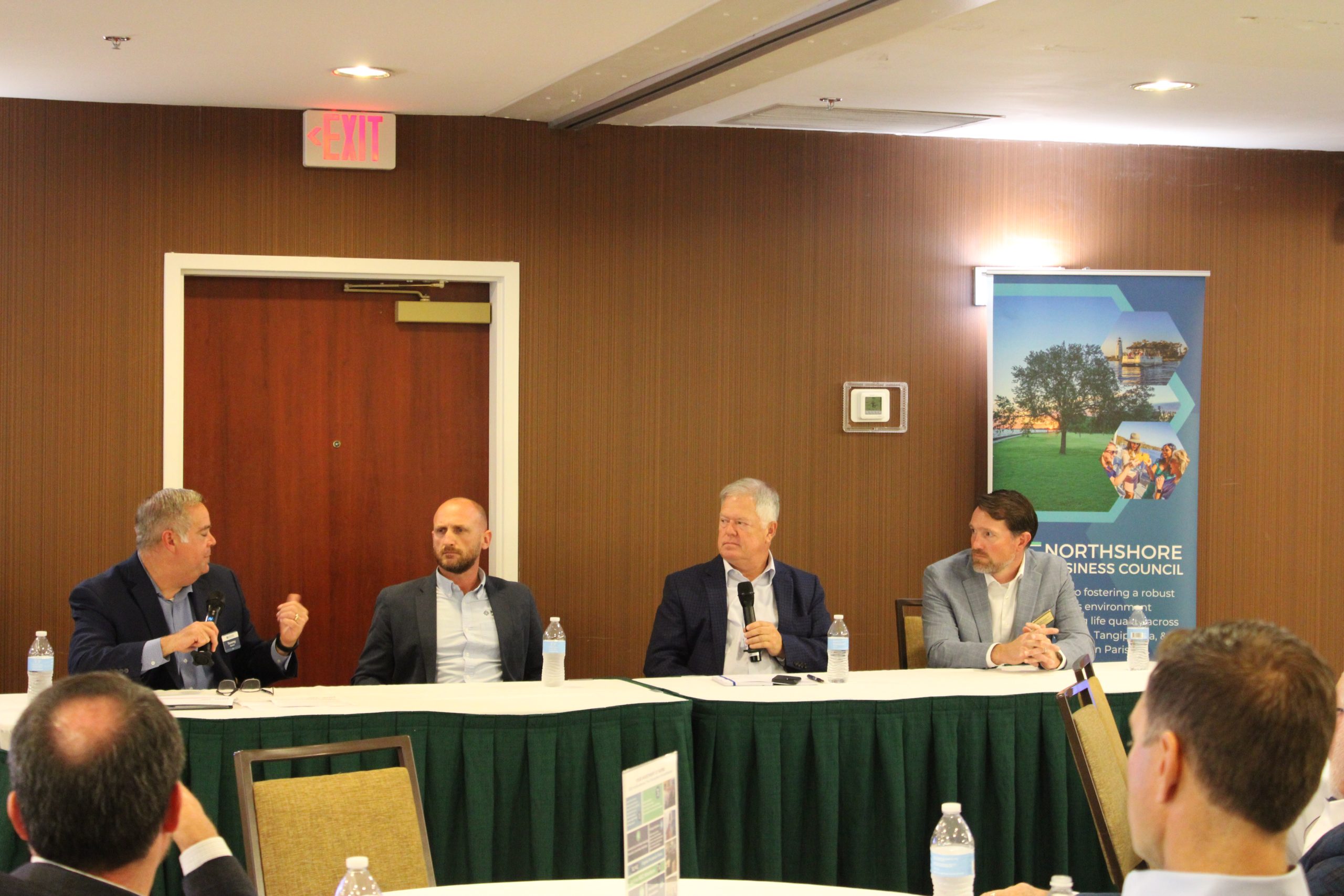
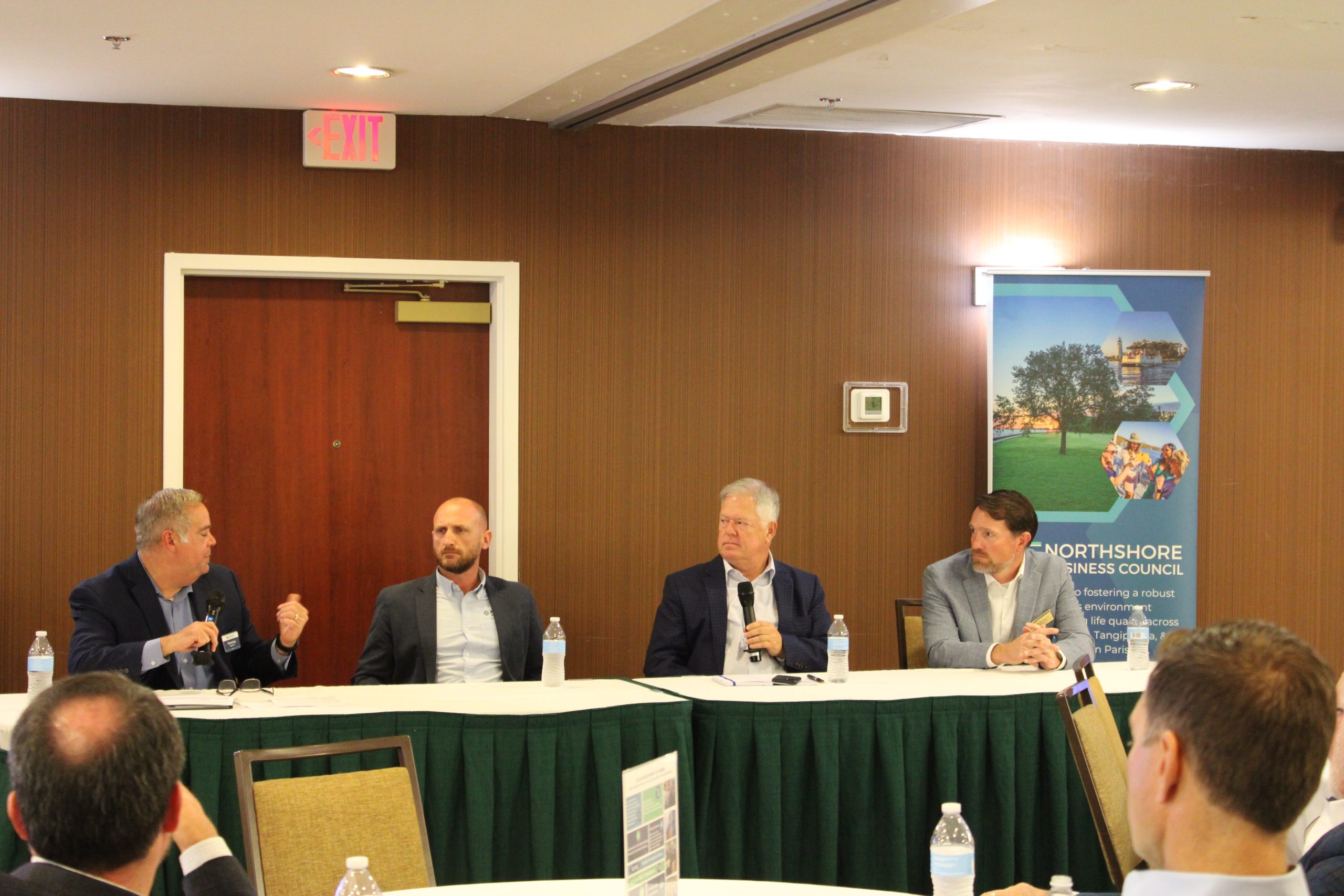
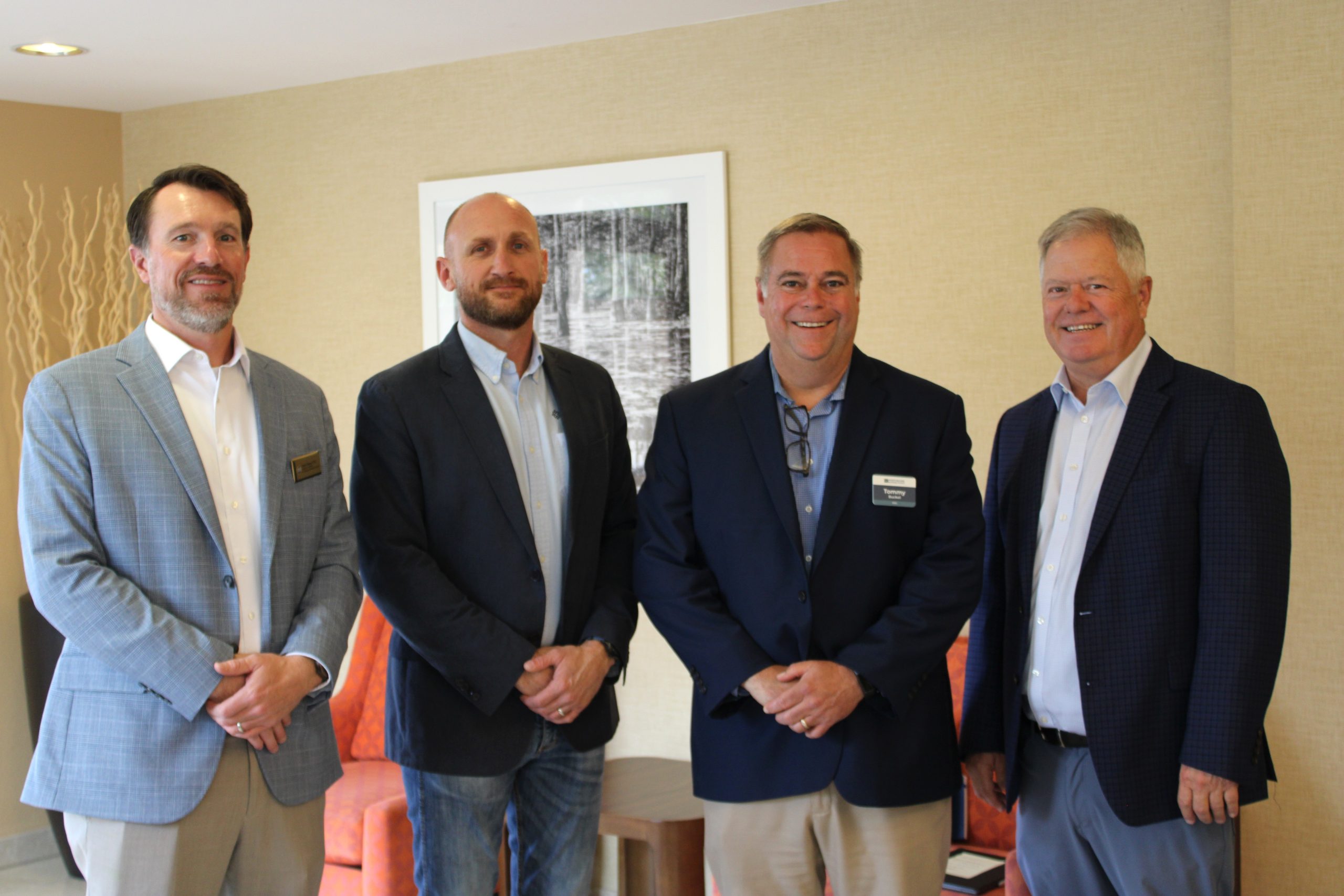
A panel featuring Chris Tissue of St. Tammany Parish Government Utilities, Alex Williams of Utilities Inc. of Louisiana, and Steve Ernst of Magnolia Utilities highlighted the complexity of providing service across a rapidly expanding region. They discussed aging infrastructure, fragmented service territories, funding constraints, rate pressures and delays caused by limited contractor availability.
Panelists agreed that collaborative planning is essential. They emphasized the importance of updated regional wastewater master planning, defined service areas and strategic investment to support economic growth. Despite differing regulatory frameworks, all three providers described strong working relationships that help address shared operational challenges.
A path forward for the Northshore
The summit concluded with a unified understanding. Water and wastewater systems form the backbone of regional growth. Investments in workforce development, emerging technologies, natural treatment systems and coordinated planning are essential for long term sustainability.
NBC President Ron Blitch and Infrastructure Committee leadership reaffirmed the organization’s commitment to convening regional leaders each year. With transportation addressed in 2024 and water and wastewater in 2025, the 2026 summit will shift its focus to drainage, another major infrastructure concern for the region.
The 2025 summit demonstrated that thoughtful planning and collaboration will determine how effectively the Northshore grows in the decades ahead. The North Shore Business Council remains committed to supporting that work and advancing infrastructure solutions that promote economic development and a high quality of life.